Spill the Boba Tea
How Asian are you?
Boba is not just a drink. It’s a means to identify yourself. An on-going data-viz passion project visualizing different data sources to explore bubble tea with cultural connotations in the immigrant community.
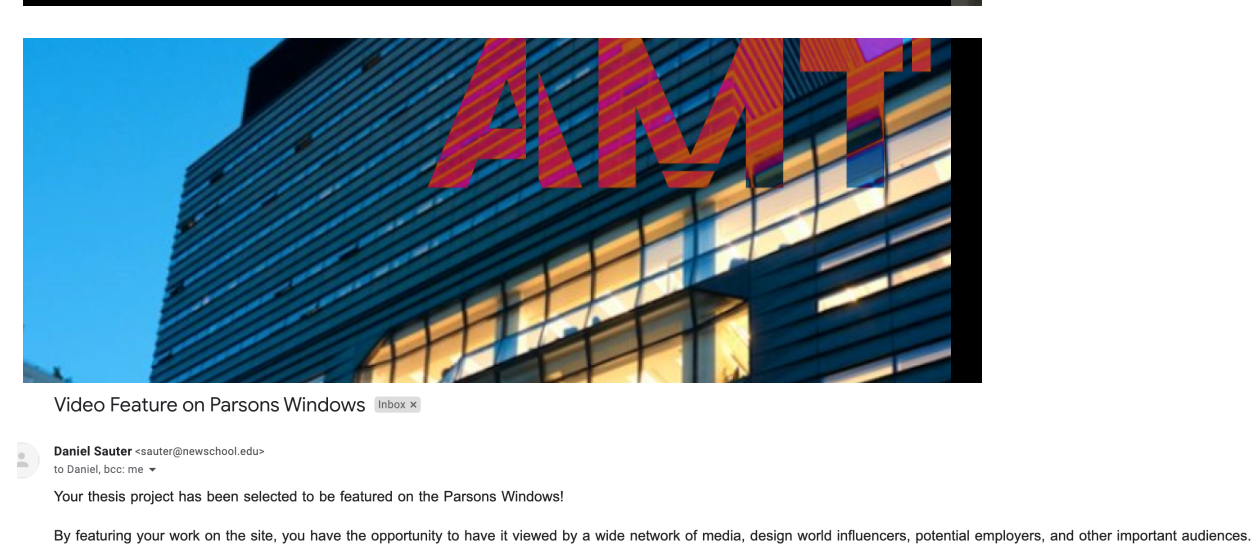
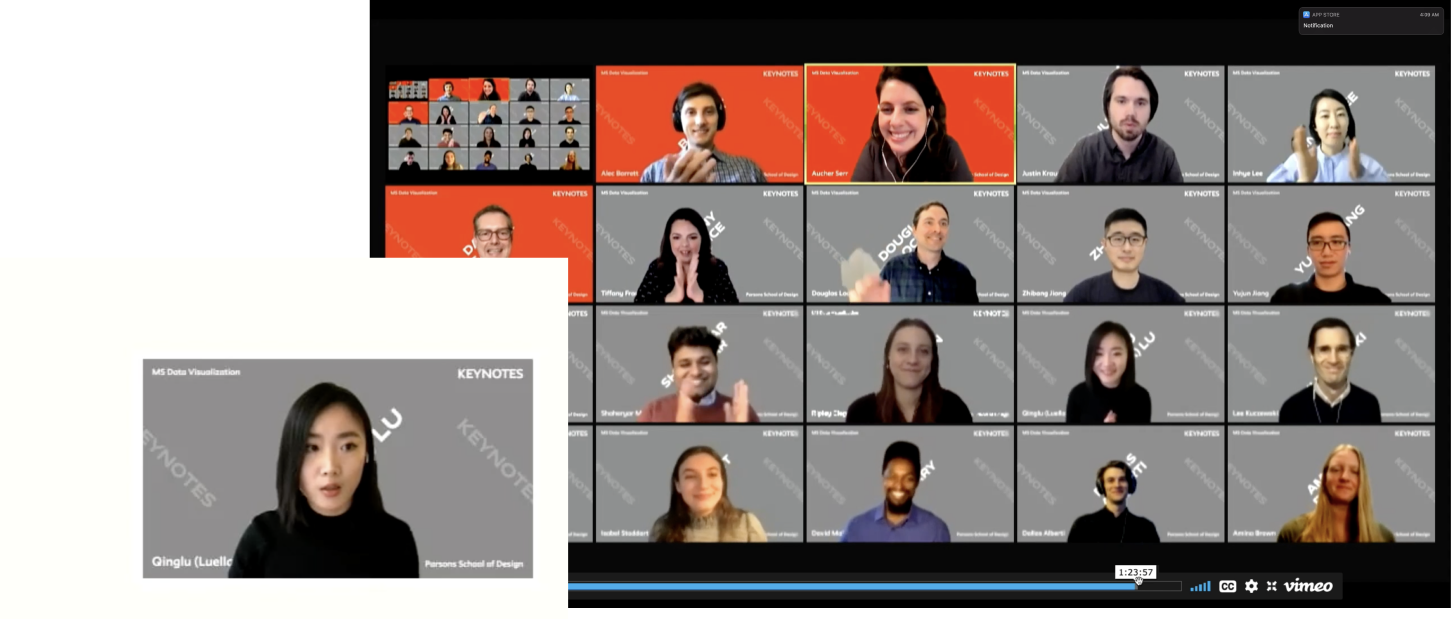
Featured in the Parsons Design Center windows.
A piece about raising awareness of the lifelong struggles immigrants face, not just Asian immigrants. The project was featured on the Sheila C. Johnson Design Center Windows during summer 2021. (Unfortunately I wasn’t able to return to the Parsons campus during that time.)
Why Boba Tea?
Over the past 30 years, bubble tea in America has gone from a niche Taiwanese beverage to a mainstream iconic cultural symbol for Asian Americans. Bubble tea (often called boba among Asian Americans) is a milk-based tea with chewy tapioca pearls, and the word has become widely used in the community as a controversial noun in the discussion of defining unique cultural traits for immigrants.
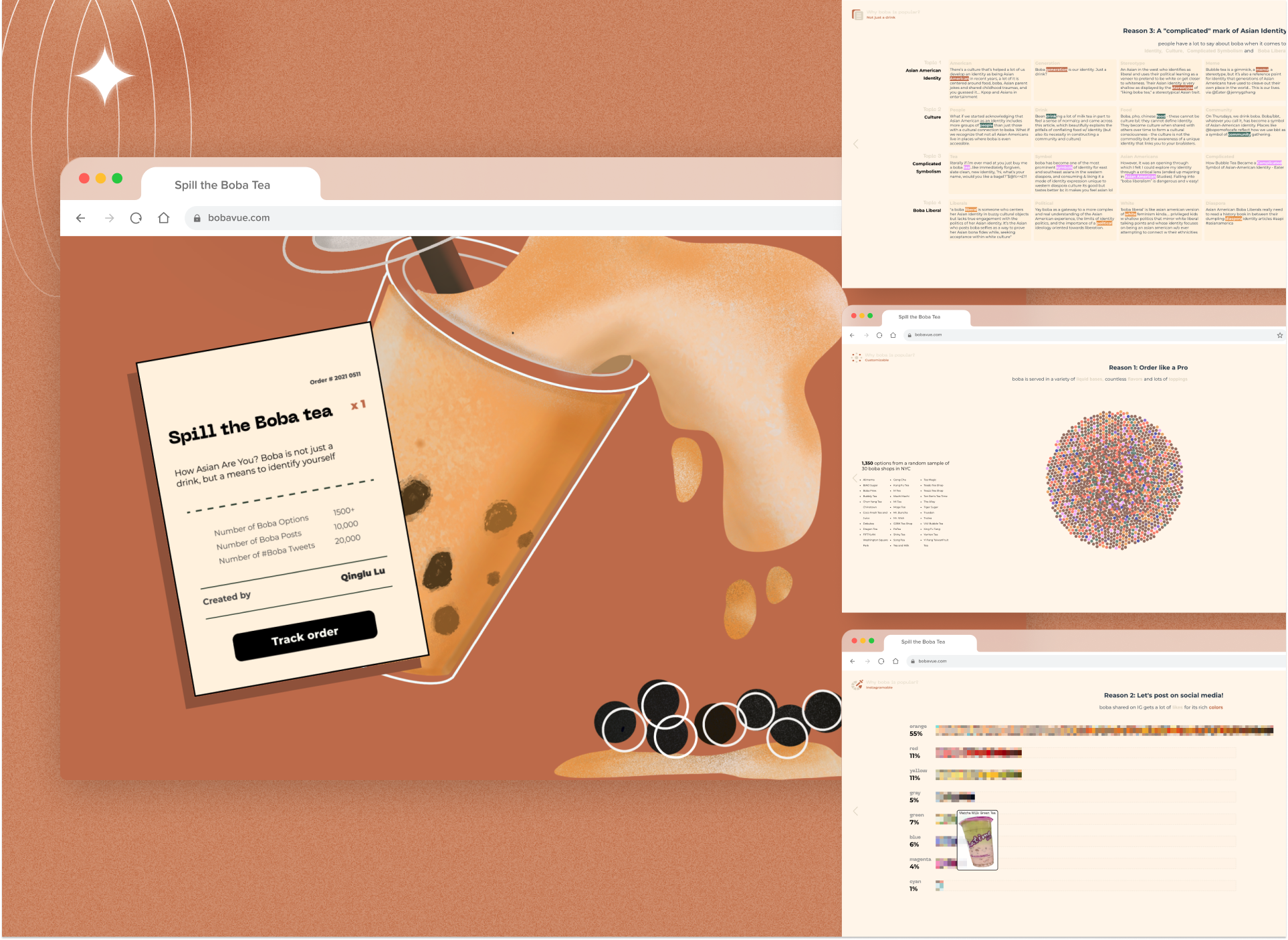
This data visualization, built from multiple data sources and charts, is intended to explore and visualize the reasons behind boba’s popularity in two parts: my drinking habits (and how a simple drink became “the boba”), and why boba became popular.
2,500 drinks · 58 boba shops
menu atomised, dot per line
The novelty never wears off. Boba keeps evolving with new flavours and customisation, leaving room for a much larger audience over time.
2,560 Instagram posts about NYC boba
boba is a social drink
Layered matcha milk tea inviting customers to share its appealing appearance through social media. boba pulls people into the trend to stay connected.
549 tweets: boba and identity
a cultural object, not just a drink
Boba brings immigrants together in their younger years as they try to find their place. On the flip side: boba is too shallow a measurement of Asian identity, likened to the often-ridiculed “boba liberals”: looks sweet and well-presented, but no real substance behind the image.
Boba, with its simple ingredients and strong social-media presence, is a cultural object readily adopted by generations of Asian Americans. But at some point in their lives, people graduate from the boba life.
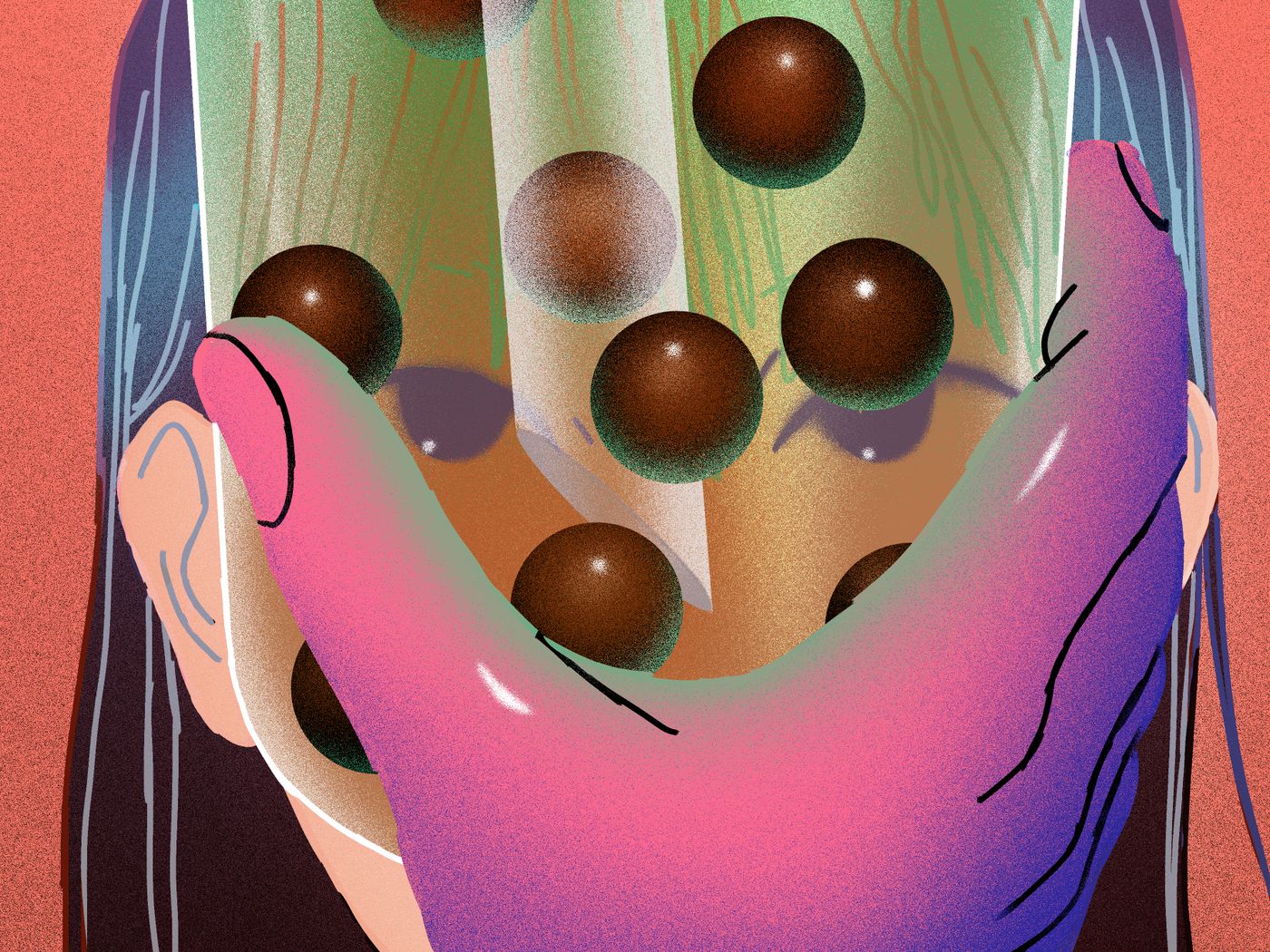
A bit of the process.
The original design was to scroll through the piece like an essay and let the audience understand the development of boba tea in the immigrant community. Through testing I quickly found the problem: everyone’s baseline knowledge of boba is different, so I had to start with the basics, which caused some viewers to lose interest before the cultural argument even landed.
- “Not quite sure what’s my focus on this visualization.”
- “It’s kinda plain with a lot of repetitive information.”
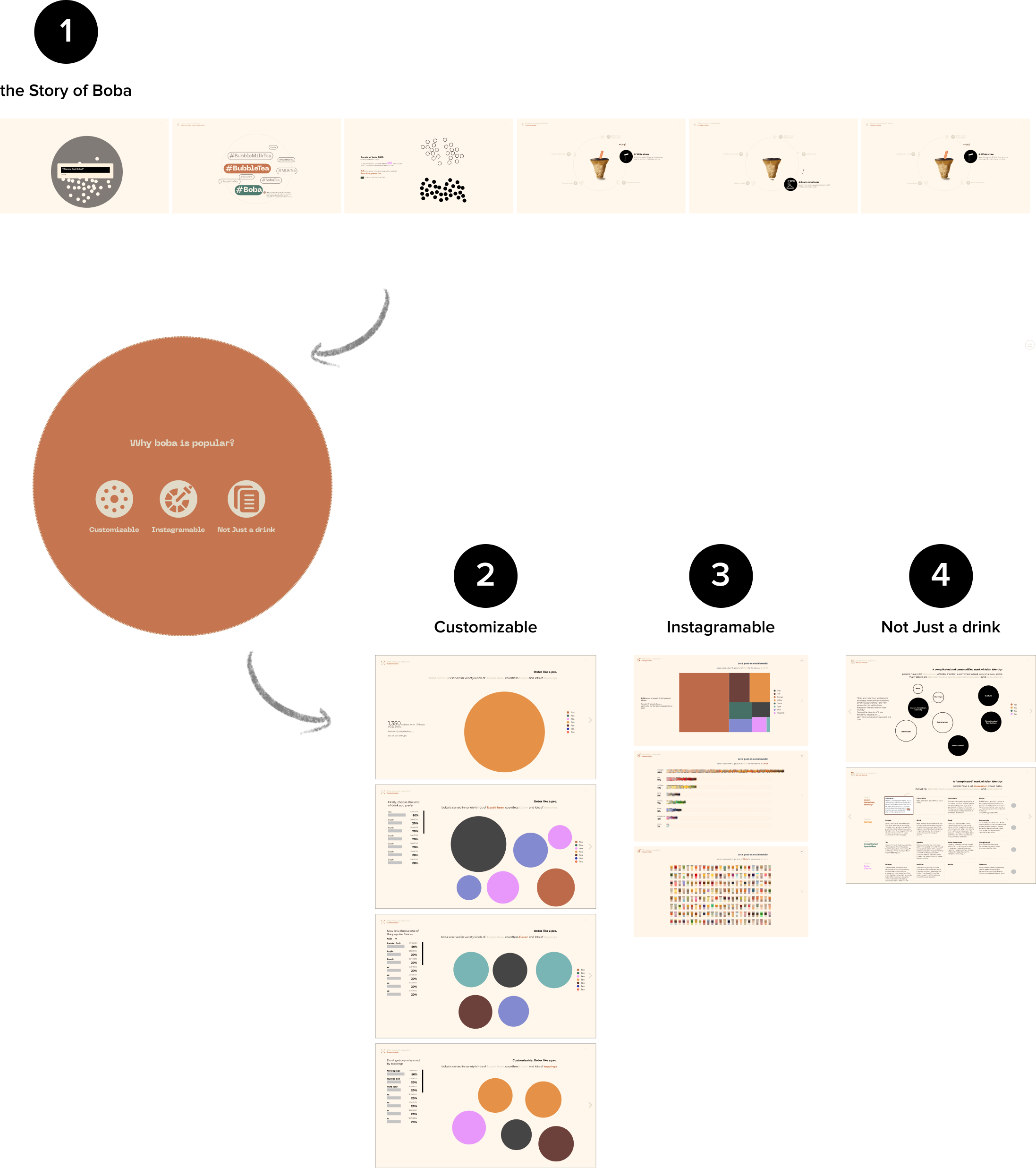
Divided into clear parts
navigation rebuilt
Reorganised the long scroll into well-bounded chapters with persistent navigation, so the reader always knows where they are and what they’re looking for.
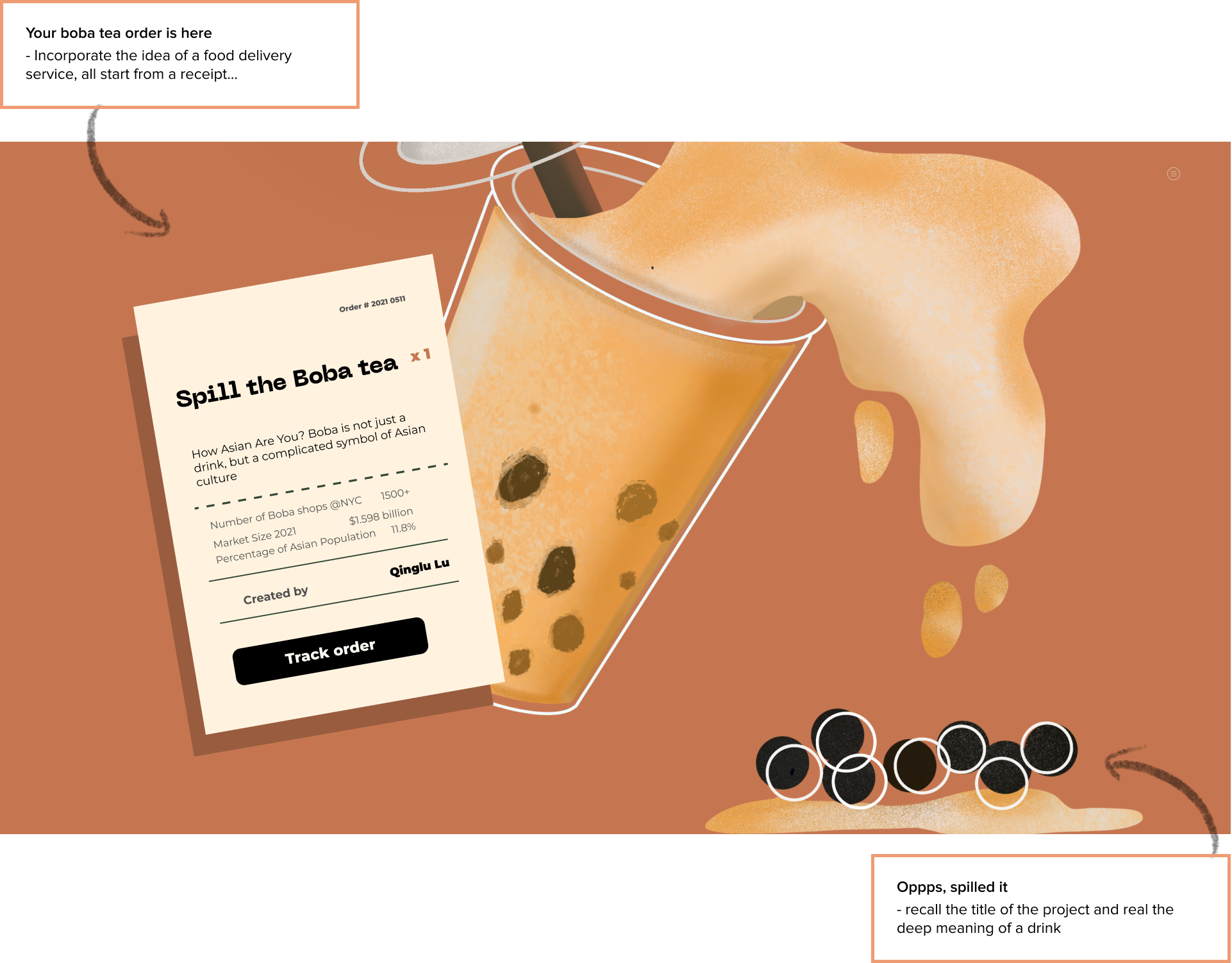
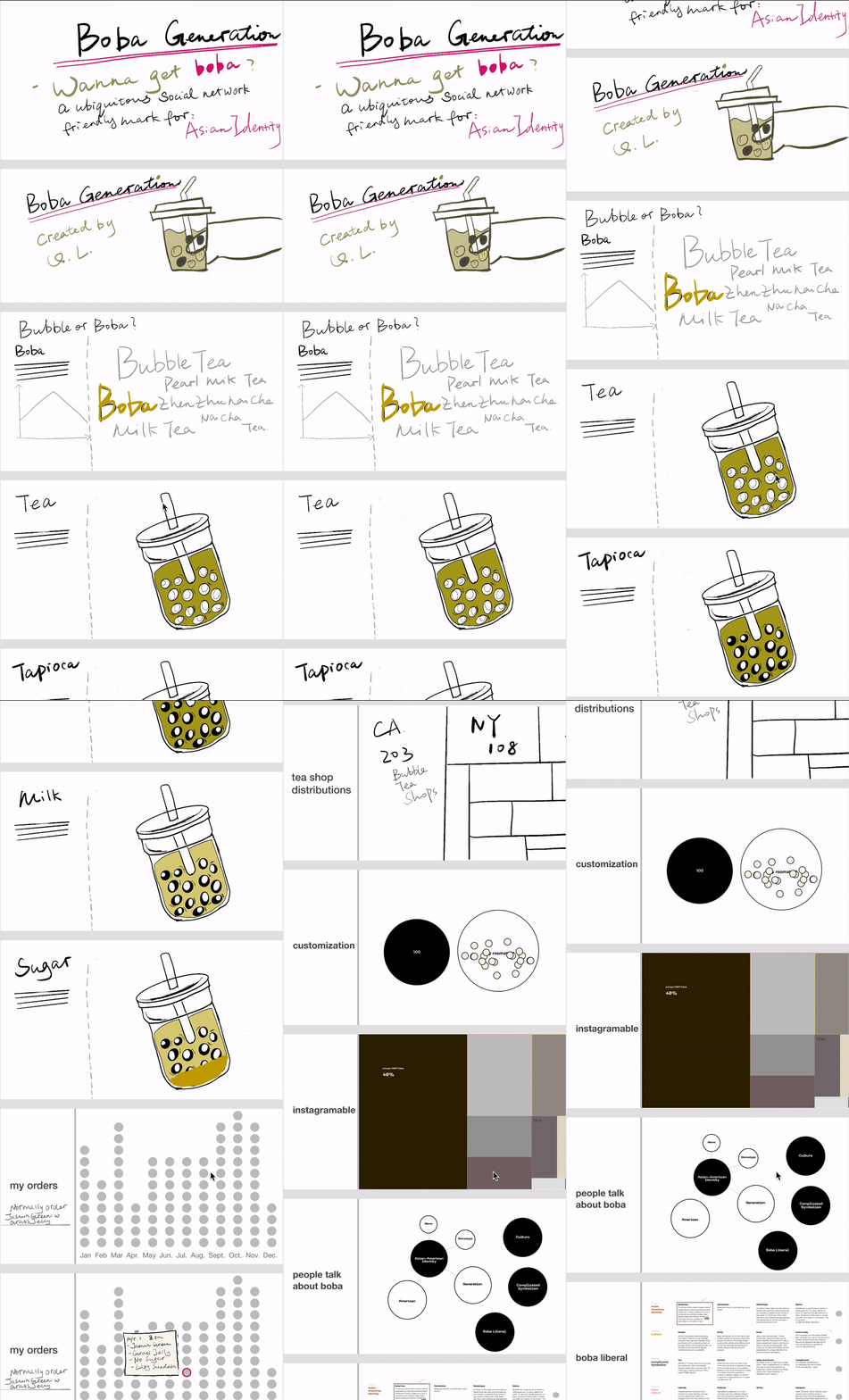
Hand-drawn visual language
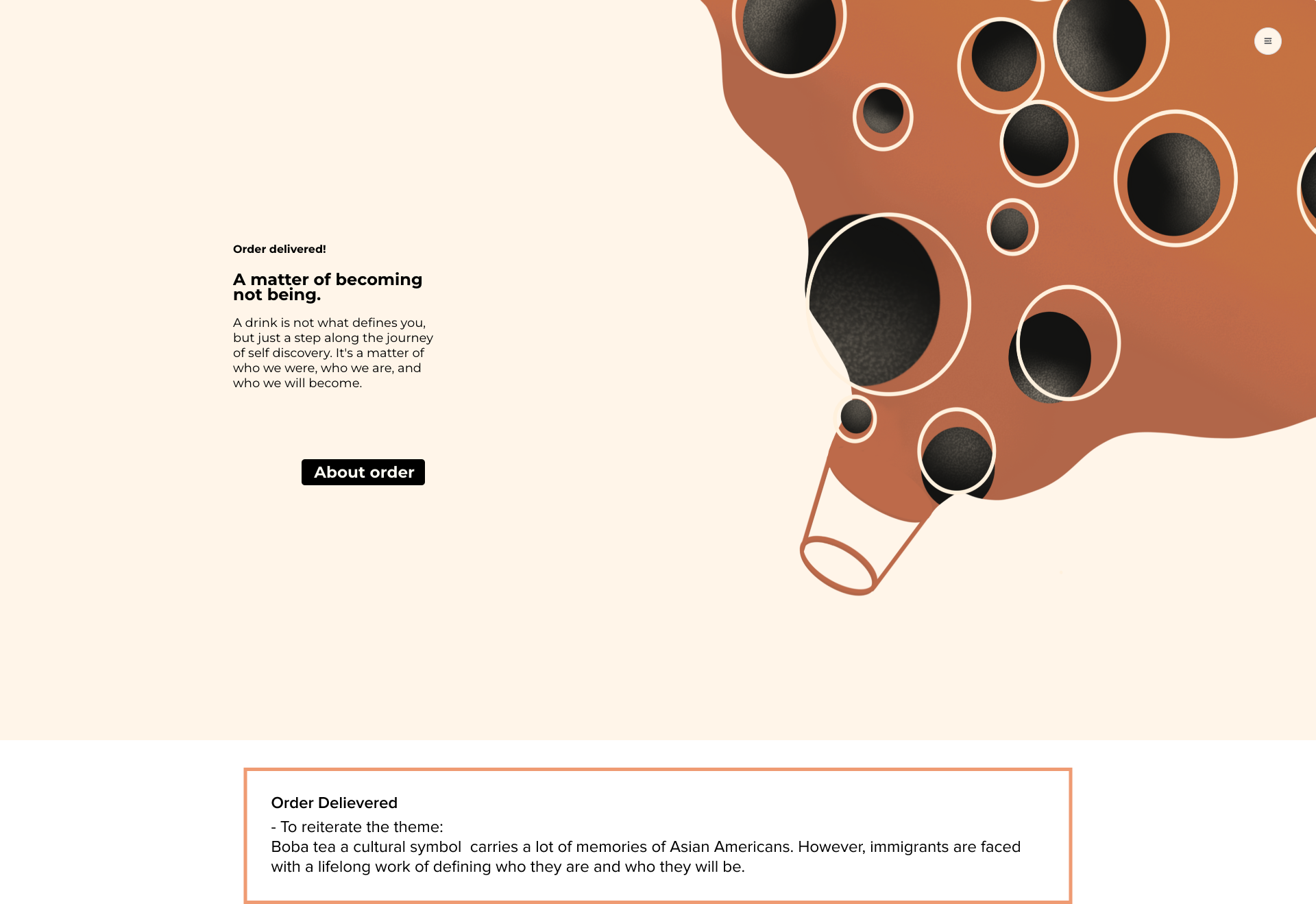
a spilled cup as scroll metaphor
Drew a custom visual vocabulary in Procreate to mimic the journey of a cup of spilled boba tea. the route of the spill literally guides the reader through the piece.
A cultural boba map of common memories.
The next step is to collect people’s memories related to boba and turn them into a cultural map of common memories. This map is different from a food map like Yelp because boba is closely tied to the memories of Asian immigrants.
I want to use the theme of boba tea to remind people within the Asian community of the cultural bond, and to let others understand the long life-story of immigrants adapting, integrating, and developing in a strange land.
More inventive designs, creative solutions, and successful collaborations.
Discover the rest: AI for media sellers, climate-risk analytics, the Smithsonian Asian-art collaborations.