Connecting Dots
of Asian Art
Worked with the Smithsonian Open Access Department to create three separate but interconnected data-viz works that visualize interesting parts of Asian art: animals, mudras, and the anatomy of a Buddha statue.
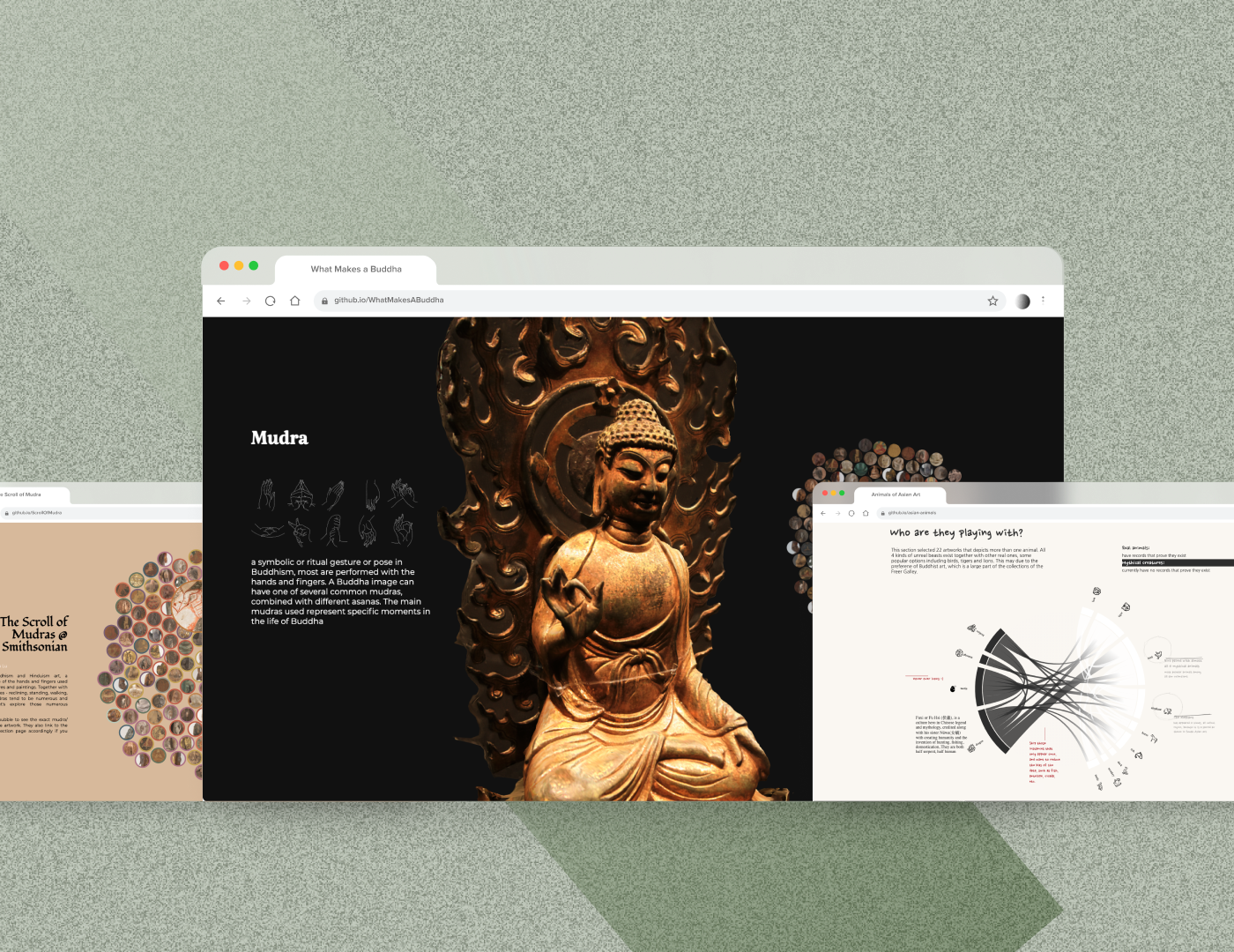
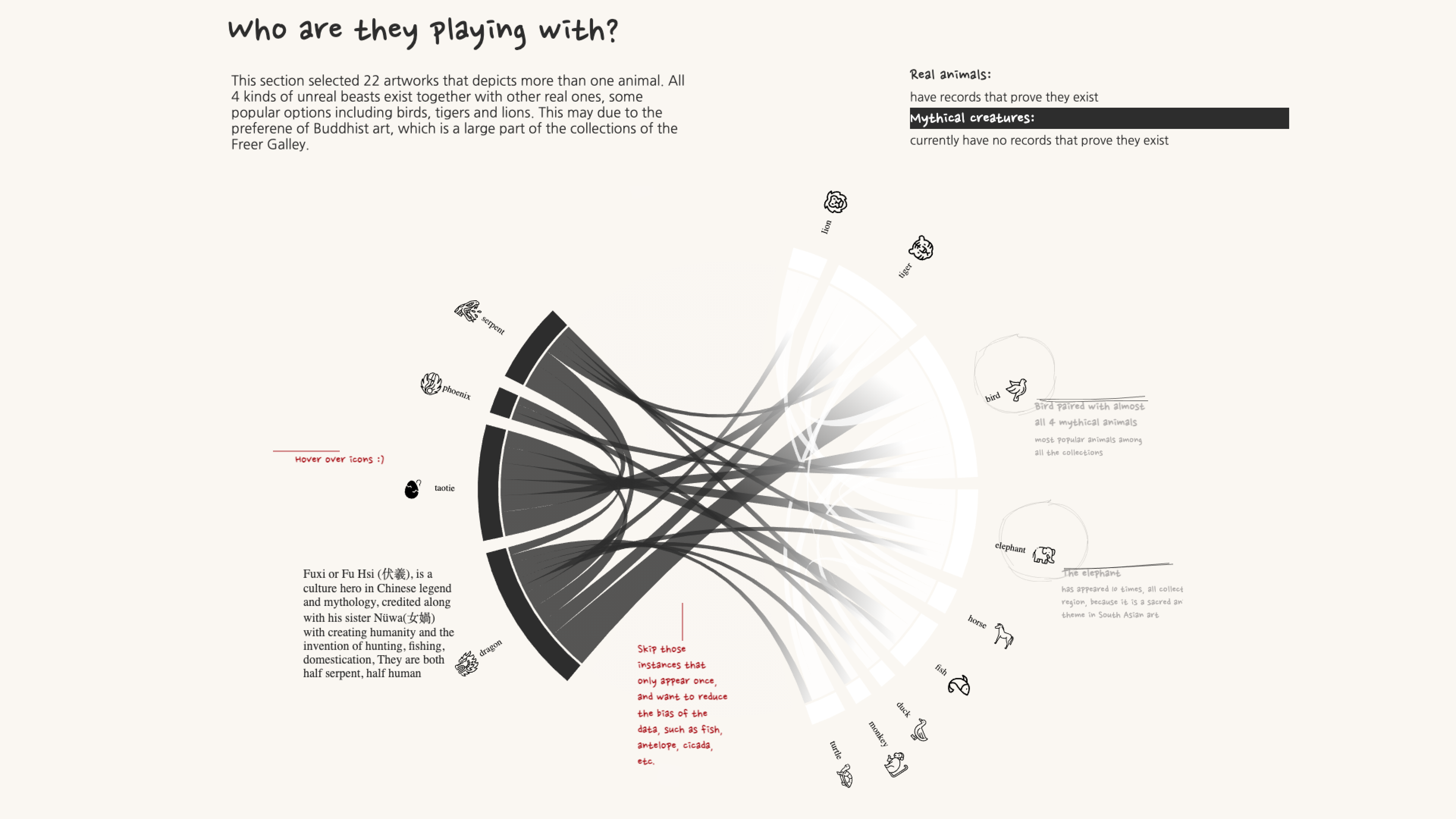
These works really got their attention.
As one of the earliest visualizations of Smithsonian Open Access collections, the work was picked up and featured on the official sites of the Smithsonian and Parsons. What started as a graduate thesis turned into an ongoing collaboration with the Asian Art curators.
Project One: Fantastic Beasts
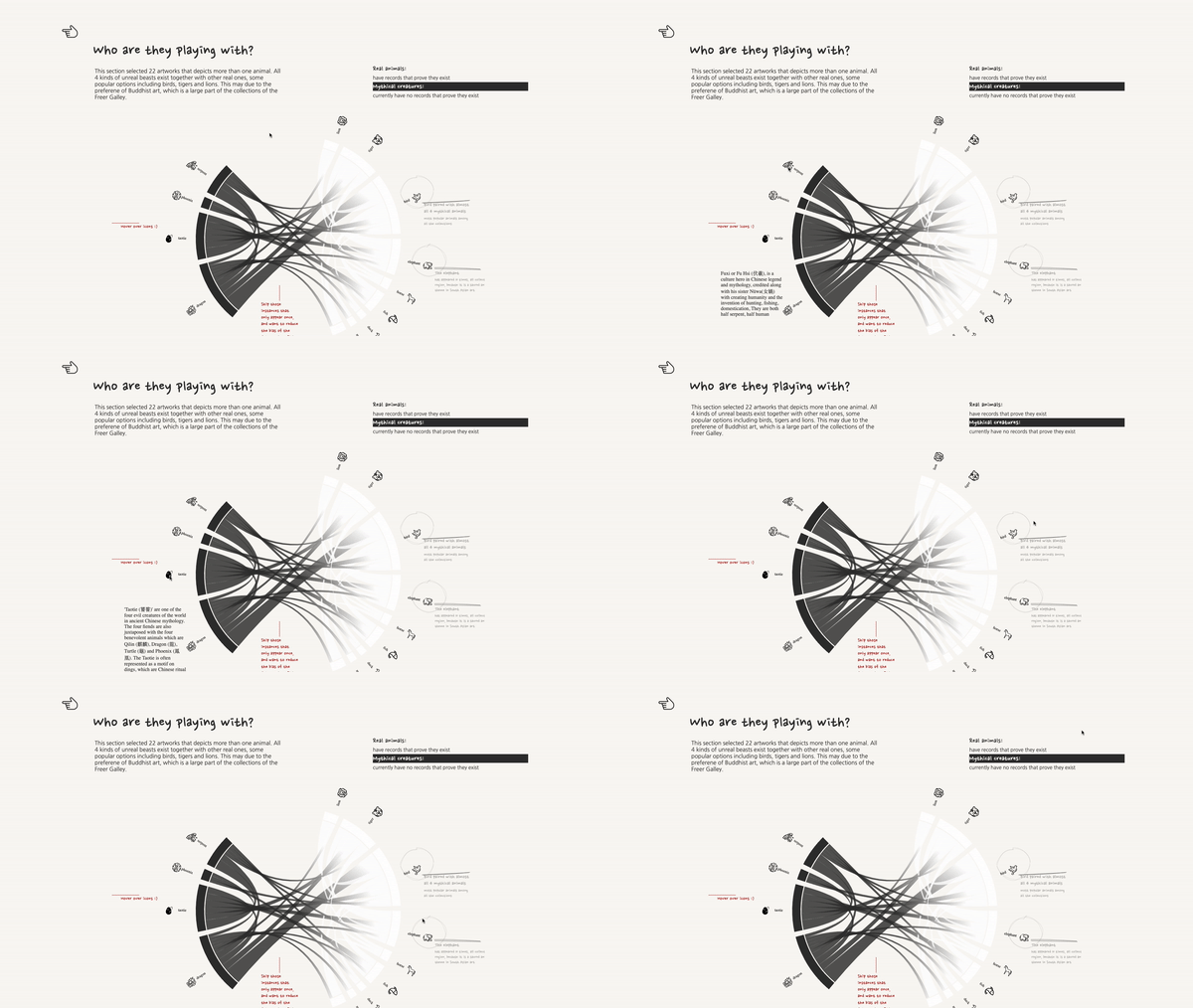
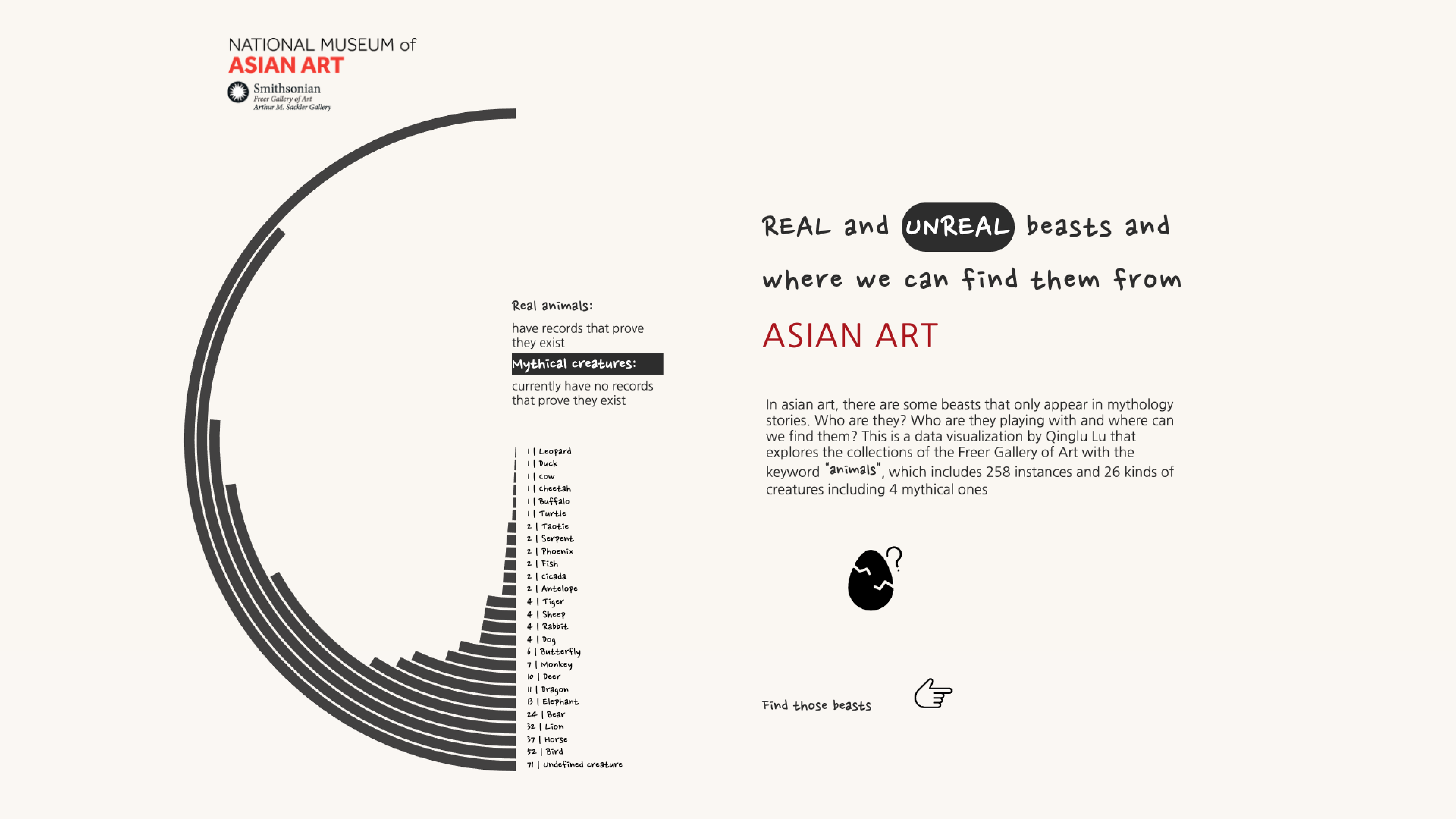
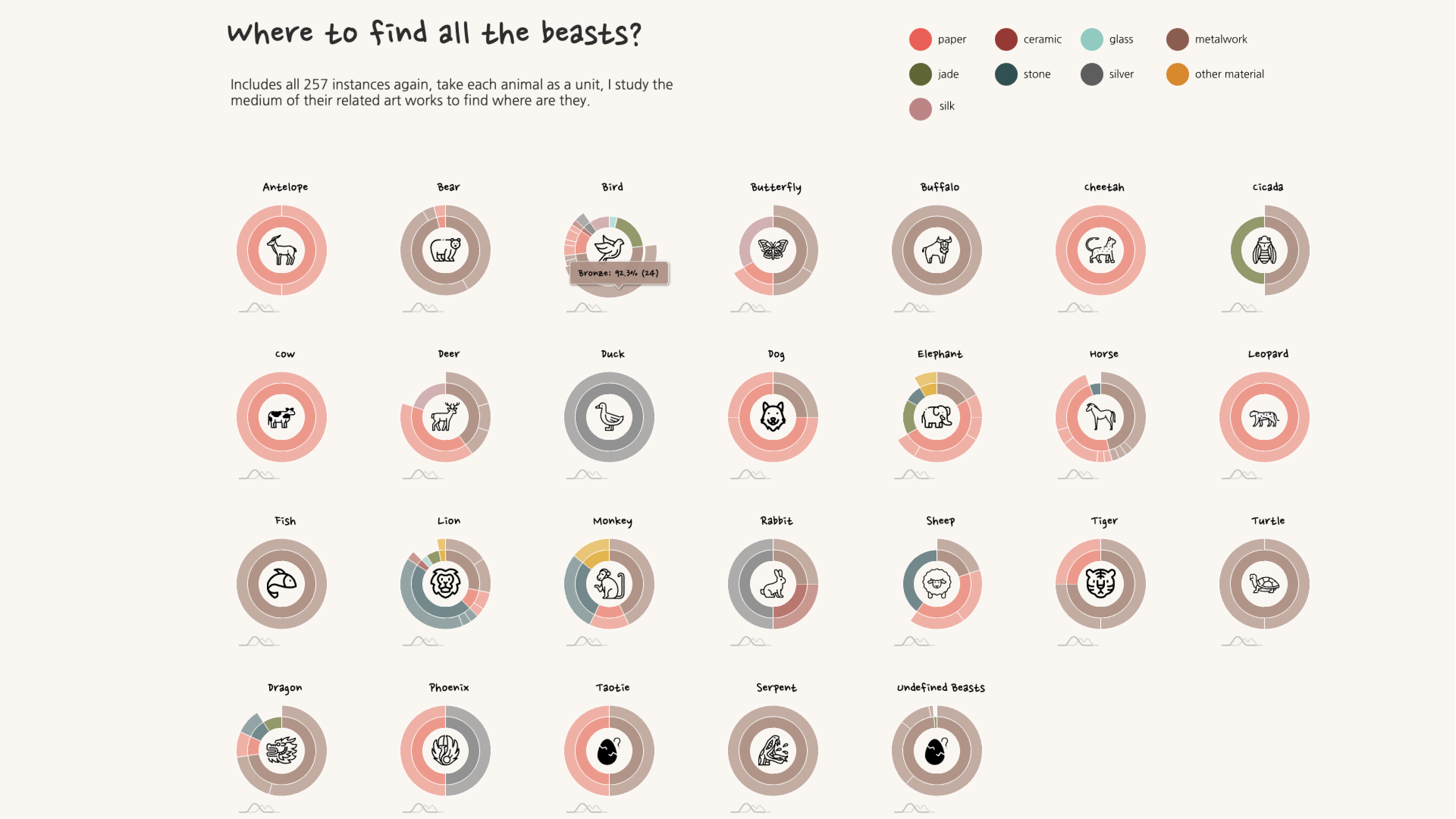
Three questions drove the piece: How many works in the collection feature animals? What kind of animals are they? And what cultural connotations do they bring with them?
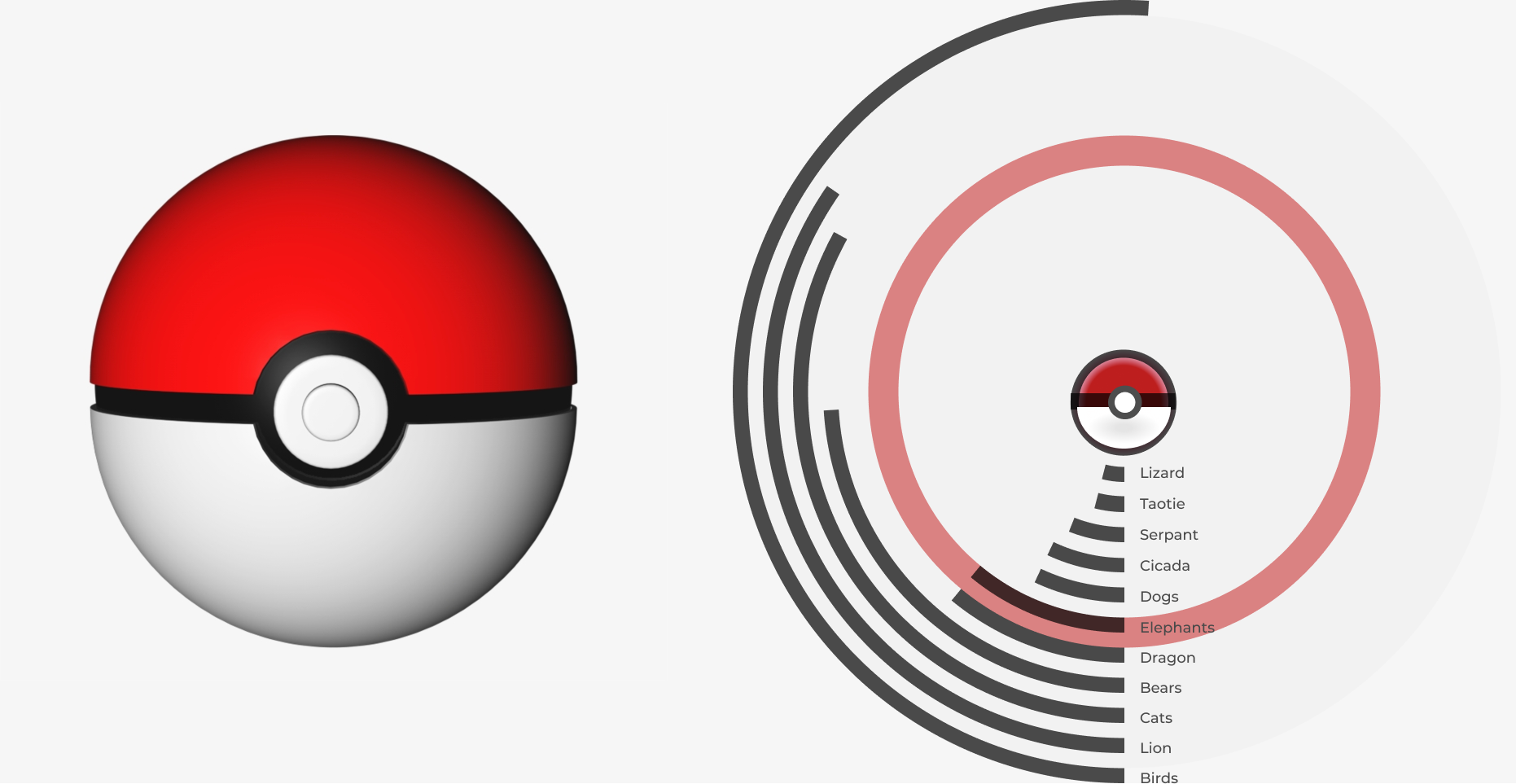
Pokémon-ball form
(round-shape chart)
I wanted the bar chart to feel like a Poké Ball you could open, so I bent the bars into a circle. Each segment is one cohort of pieces, radiating out from the center.
Animal icons
(hover-to-reveal)
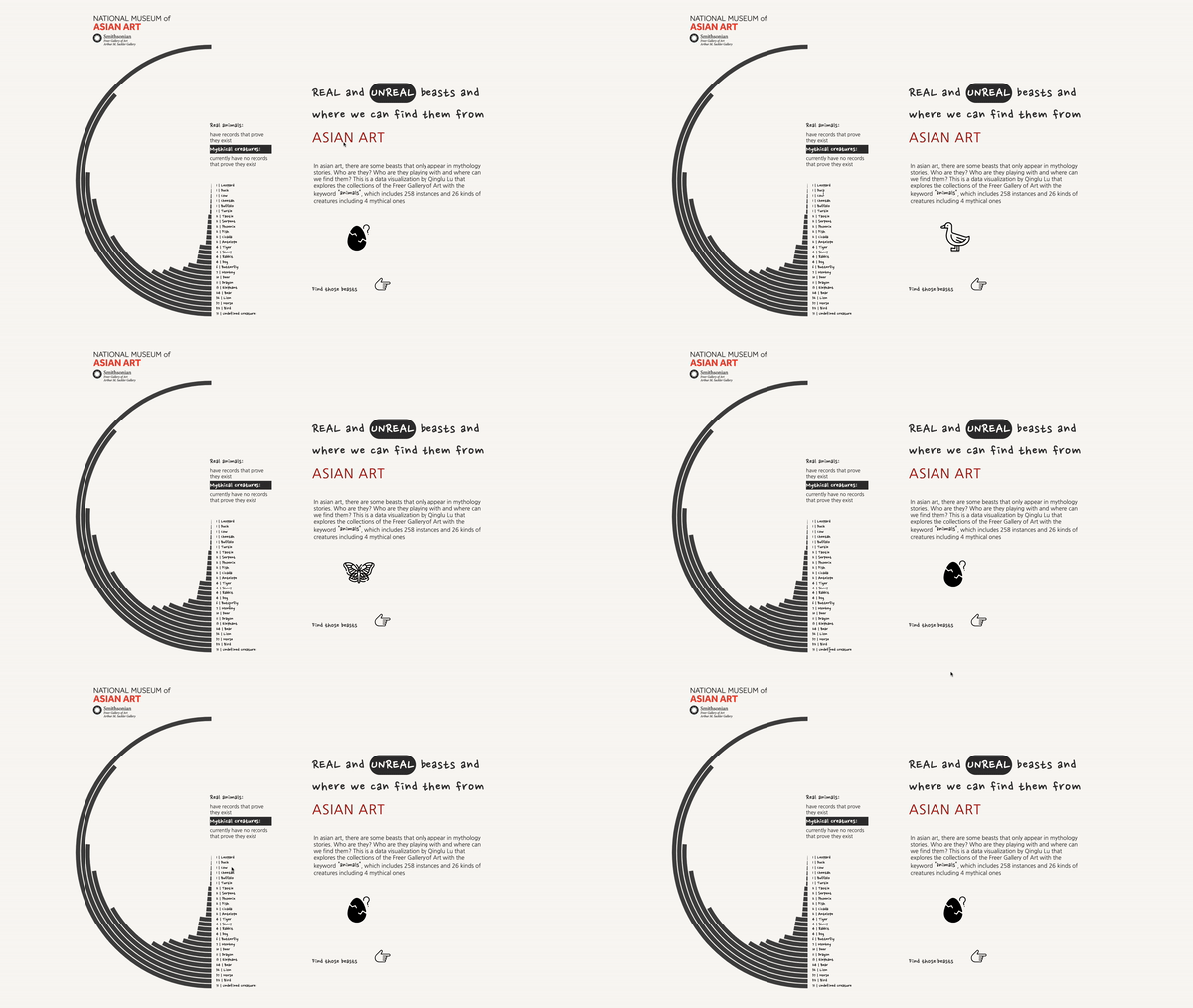
Default view is an egg on the home page. Hover over any animal name and the icon pops out, a small reward that adds a sense of exploration to what could otherwise be a flat dataset.
Hand-drawn doodles
(Sketch.js brush feel)
I introduced Sketch.js to turn ordinary lines into a brush-stroke effect with a random, alive doodle quality. It mirrors the liveliness of the animals themselves and pushes back against the sterility of most museum data tools.
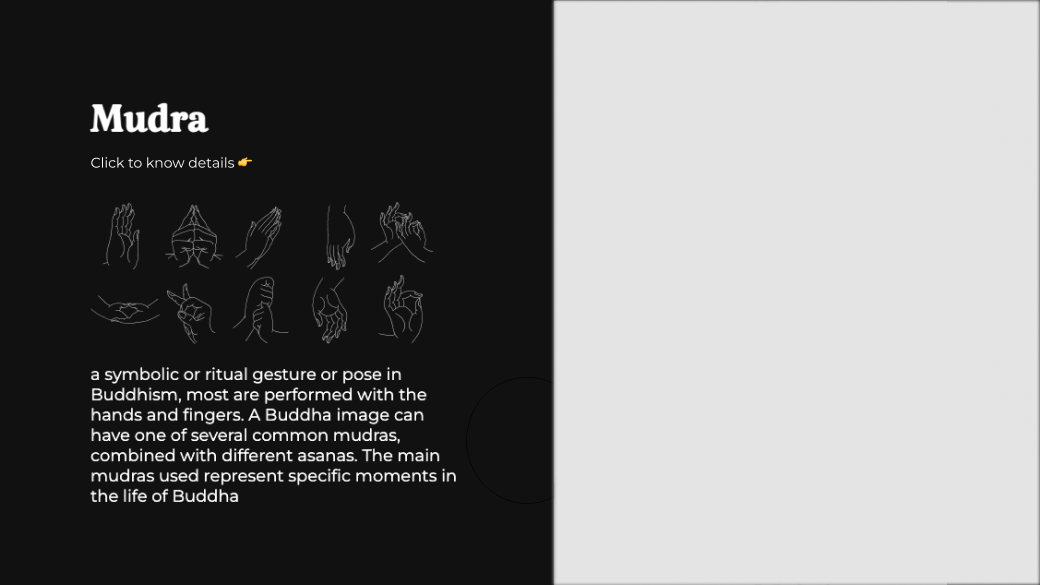
Project Two: The Scroll of Mudra
Inspired by ancient Buddhist scripture scrolls, the mudra (gesture) art pieces are gathered together and synthesised for presentation. The piece answers three questions in sequence: what a mudra is, how often each one appears in the National Museum of Asian Art, and what meanings the different mudras carry.
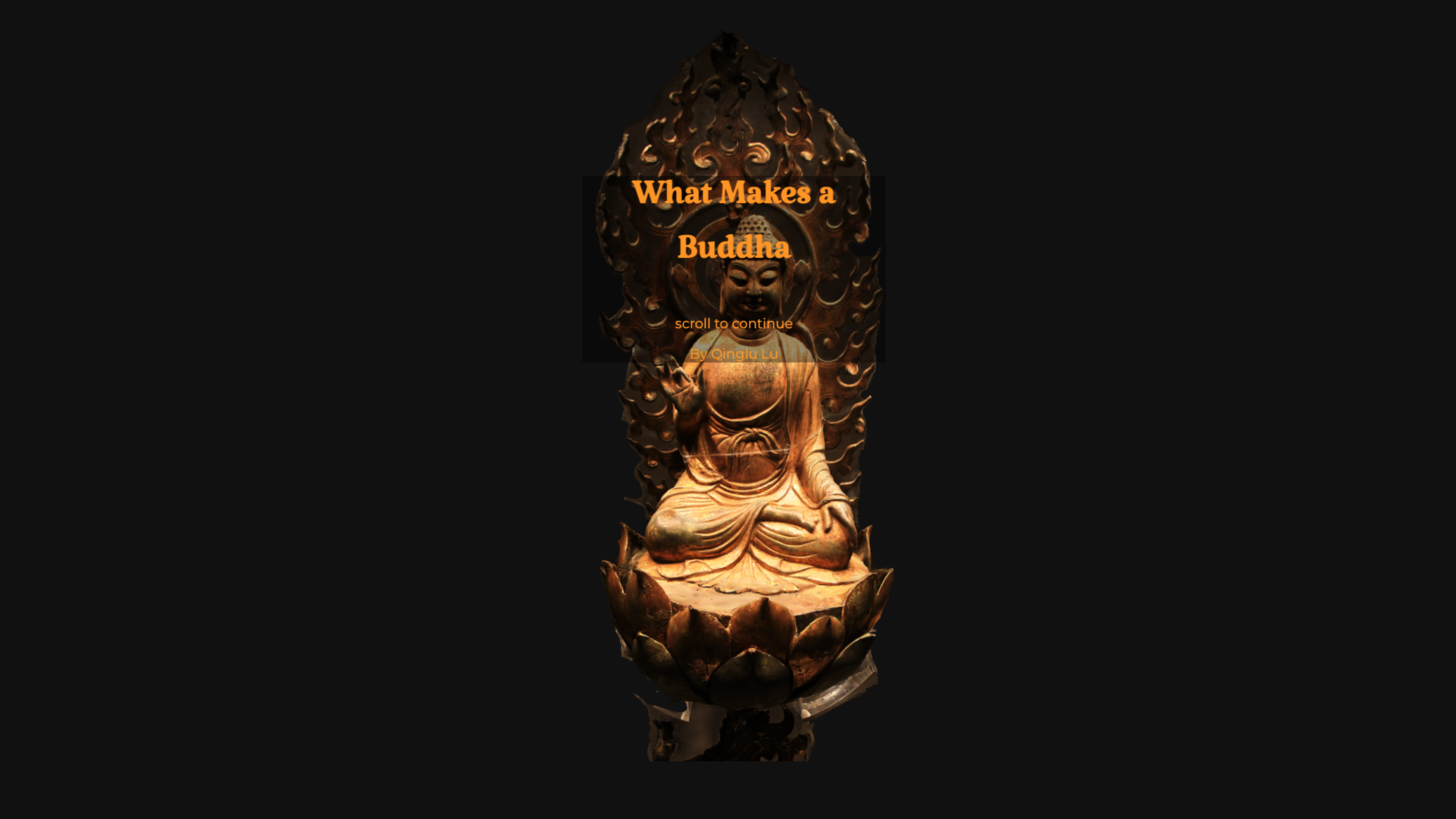
Project Three: What Makes a Buddha
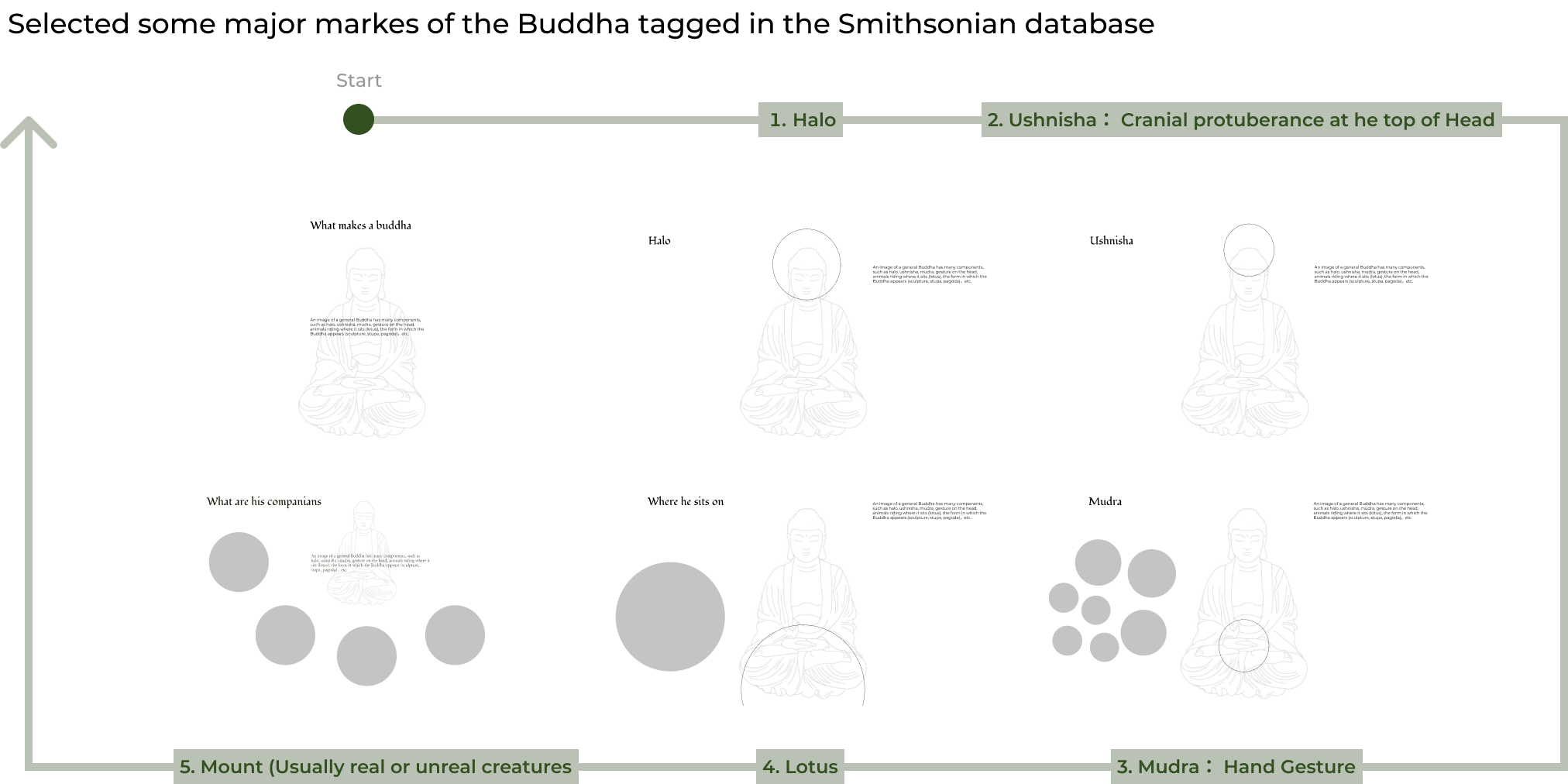
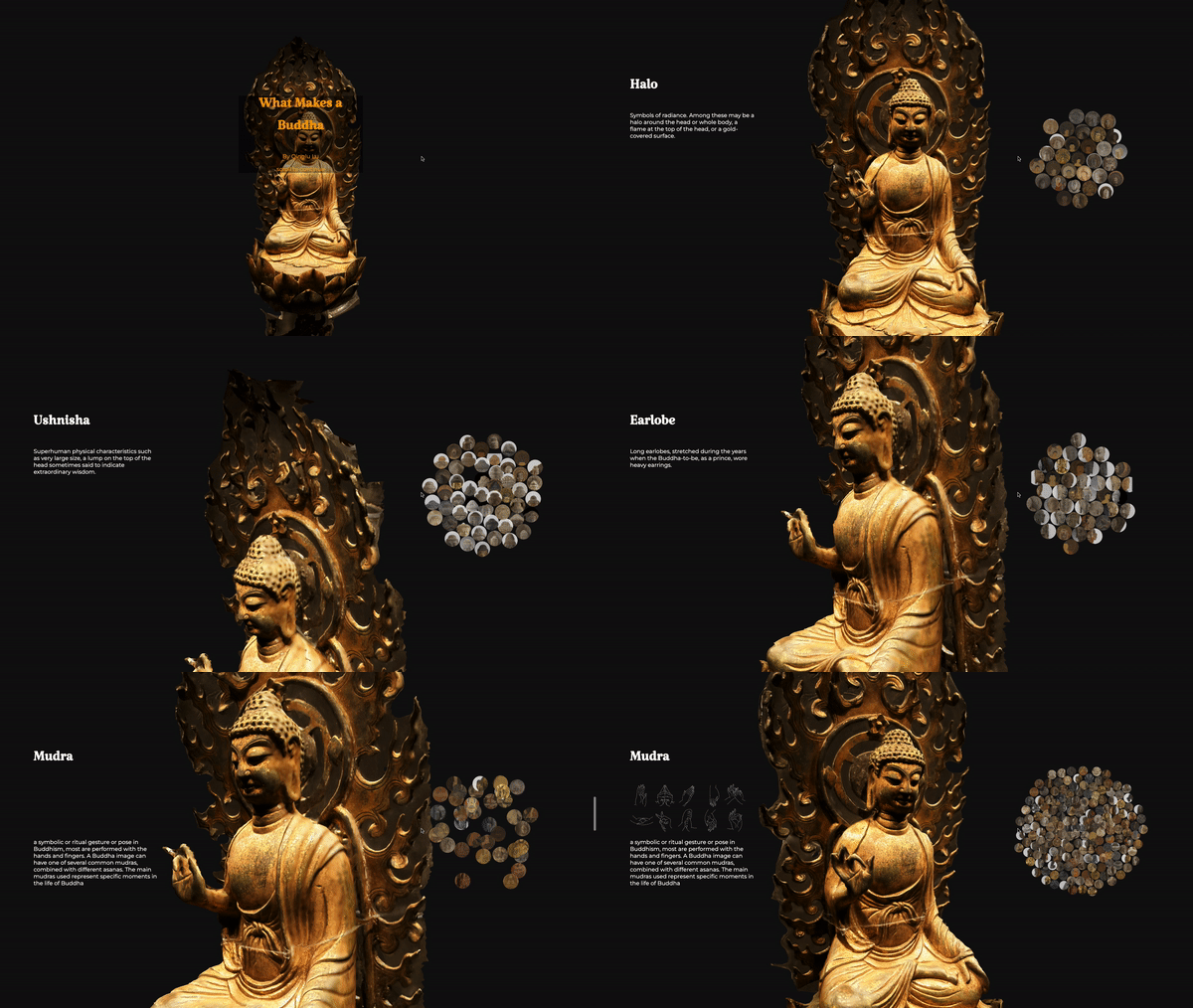
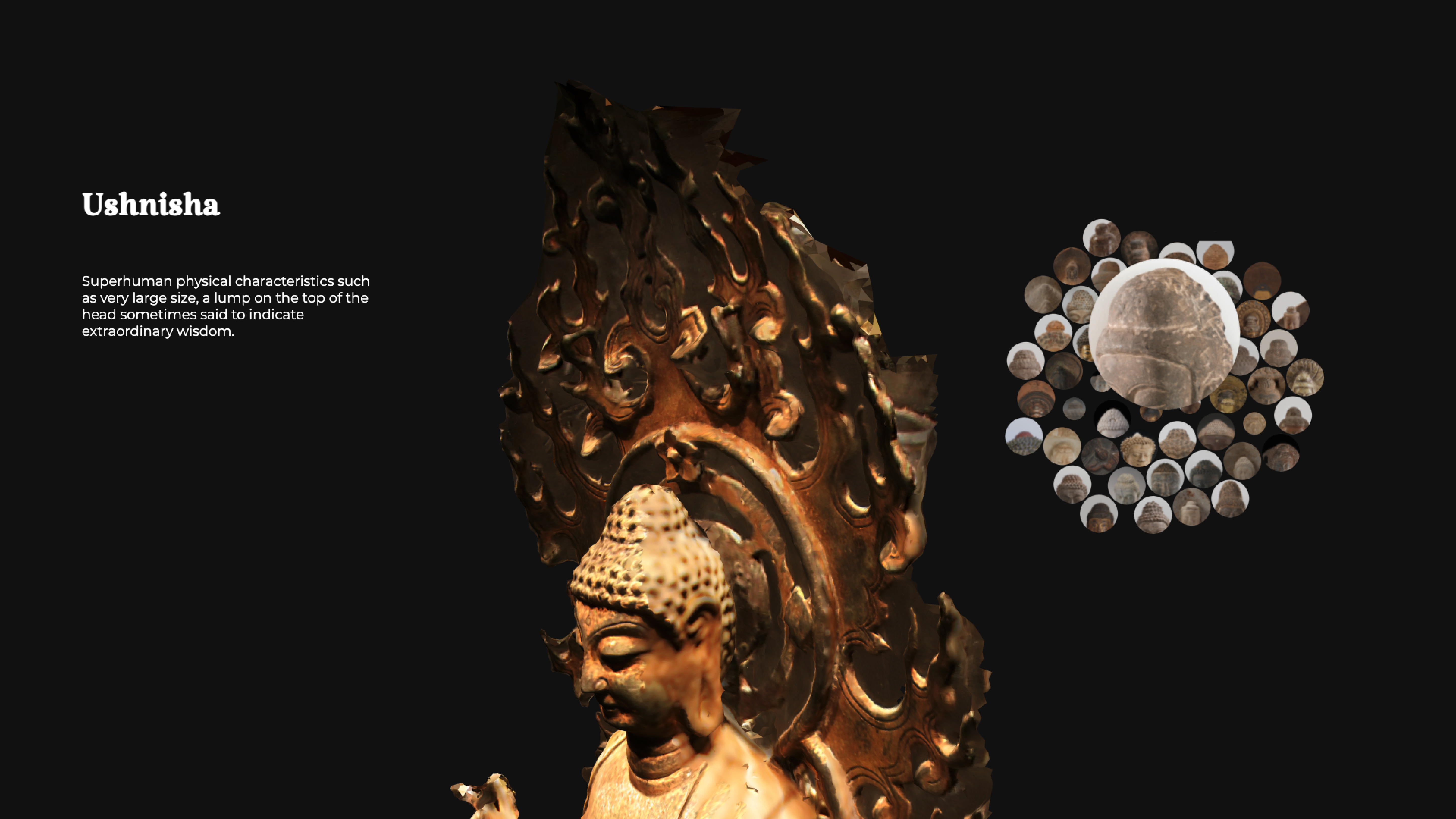
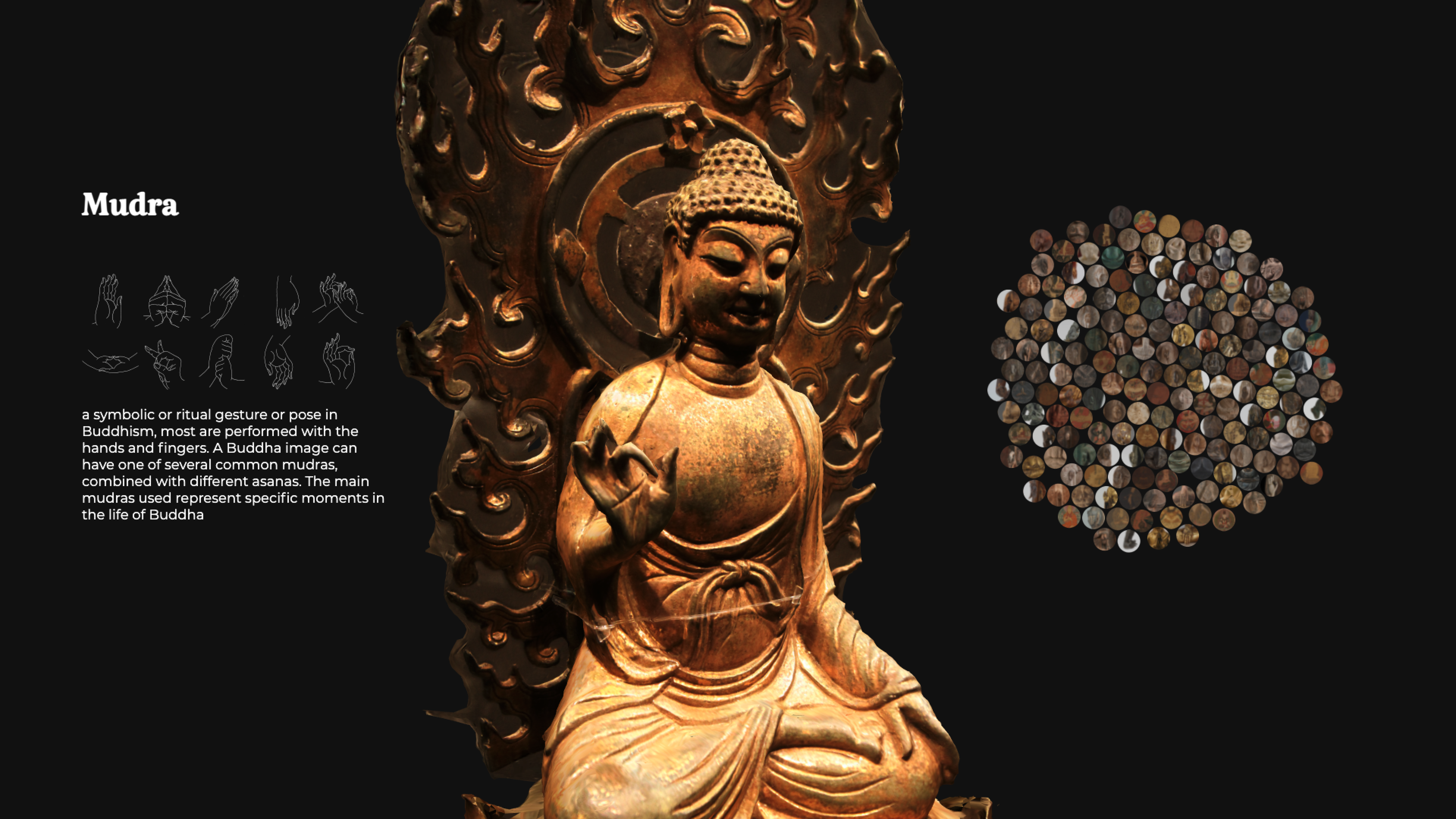
Inspired by observing a Buddha statue at a Buddhist temple every new year. A comprehensive introduction to the different parts of Buddhist sculpture, simulating the experience of a visitor walking around and reading the piece.
Scrolly-telling
(no charts at all)
I drew all the mudras here. Where Project One collected animals as one of the marks of a Buddha, this one collects every other significant mark: hand positions, drape, accessories, posture. No charts; the user scrolls through the body of the statue from head to toe.
From 2D into 3D
(walk around the statue)
After Smithsonian approval I added an external 3D render of a Buddha as an illustration to show the piece more visually and simulate the movement of a visitor walking around the statue.
“We’d love to have you visualize our whole Asian-art collection.”
All three projects were built remotely, which brought a lot of communication friction with the client and the designer cohort. At the start, the database felt overwhelming: a lot of fields, not enough metadata.
So I reached out directly to the Smithsonian team and asked for clarification. At the end of the project, I was invited by the director of the Museum of Asian Art to help improve the Smithsonian database itself, using this work as the starting point.
More inventive designs, creative solutions, and successful collaborations.
Discover the rest: AI for media sellers, climate-risk analytics, and the on-going boba-tea passion project.